
Besides Squid Game, I can’t recall if I’ve ever finished a K-drama. Unlike most people, what pulls me into Korean stuff isn’t the pop culture, it’s the history. It’s fascinating to me how a small peninsula survived for centuries next to nations with massive power. The other thing that pulled me in was Hangeul, the Korean alphabet. I was skeptical at first, because of a famous quote: “A wise man can acquaint himself with them before the morning is over; a stupid man can learn them in the space of ten days.” I tried, and it’s true. It took me one night to learn all the vowels. By the next day I had the whole alphabet memorized, and that was before I knew a single Korean word, before any K-pop, before any K-dramas.
I grew up in an environment where everyone watched anime and Western media. My first Korean film was Parasite (2019). My only real exposure to Korea before that was researching the Korean Peninsula for an essay in university, and that’s what hooked me too: the idea of one family, one nation, split apart because a bigger power wanted a war with someone else. That’s a topic for another day, though. What I actually want to write about here is Six Flying Dragons, a dramatized account of the founding of the Joseon dynasty, following Yi Seong-gye’s rise to power and the circle of men around him who made it happen.
But if you never learned the actual history, stop reading here and watch it blind. I’m sure it’ll be 100% better that way.
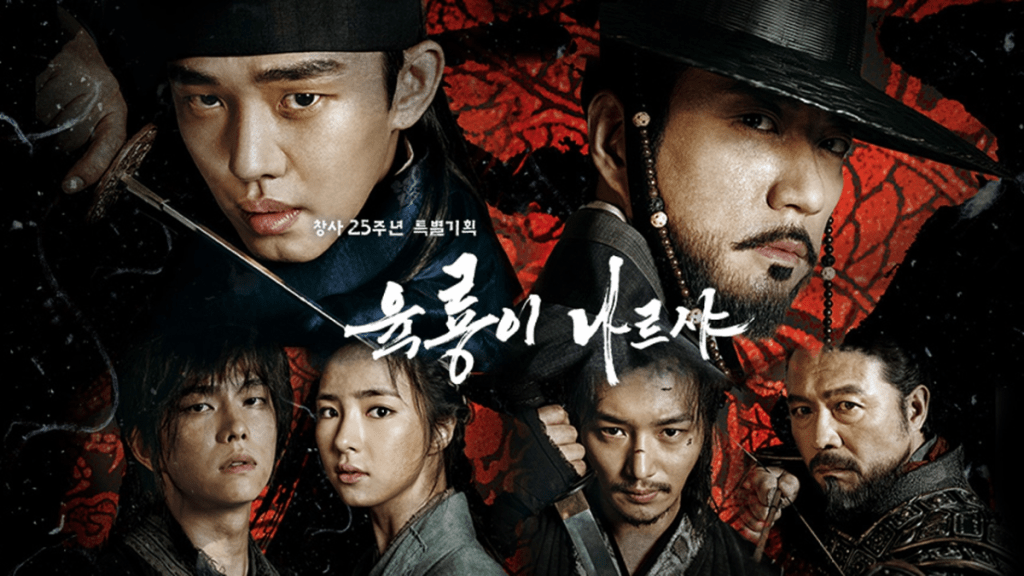
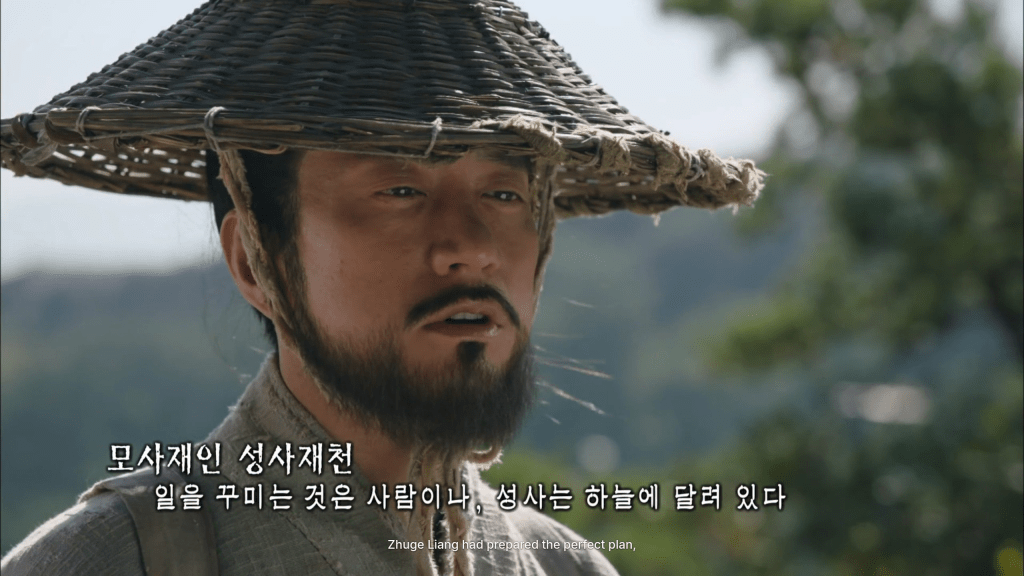
For years, the only “ancient” history or entertainment I really liked was Romance of the Three Kingdoms. I know it’s a “romance” (there’s plenty of embellishment to make the story more compelling), so it’s not an accurate depiction of events. But it’s still adapted from real history, and that’s the same case with Six Flying Dragons. I nerded out hard when Sambong (Jeong Do-jeon) name-drops Zhuge Liang and Sima Yi. As a fan of both stories, though, I’ll say it: Six Flying Dragons is better, in my opinion.

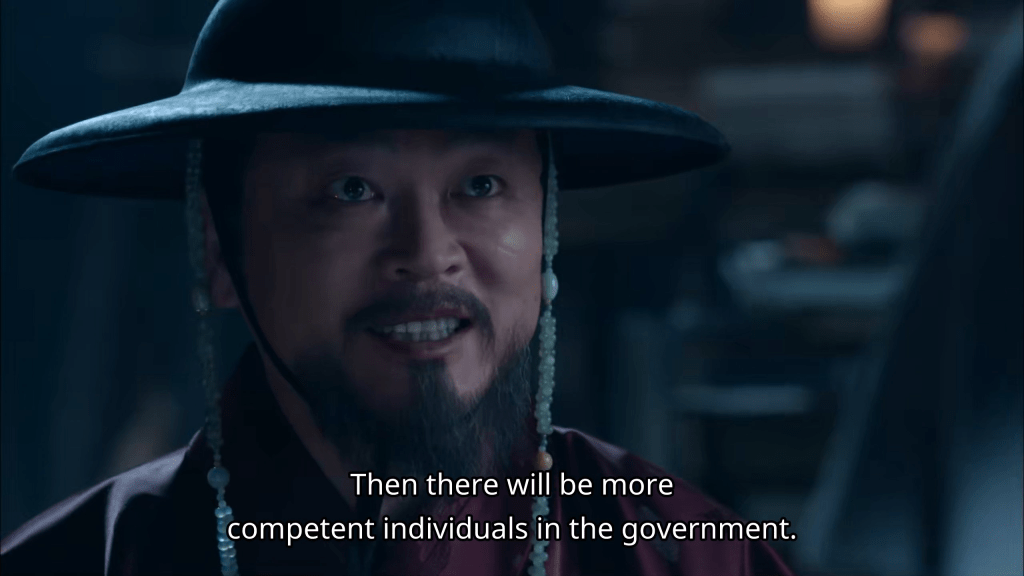
Here’s why. Three Kingdoms is a struggle between kingdoms. Six Flying Dragons is an internal struggle. Sure, there are the Jurchens (modern-day Manchuria), the Yuan dynasty, and Japanese invaders in the background, but the real fight is internal, a fight between scholars, aristocrats, and the military, mostly playing out inside the supreme council. Sometimes their private armies clash, sometimes a war breaks out, but it’s rarely large-scale. It’s mostly a fight between friends, family, and fellow comrades, which makes it so much more interesting.
Not really a spoiler, since this is based on real history, but: it starts simple, good guys vs. corrupt officials. By the middle, it’s a battle of ideals. Do you fix the kingdom from within, or is the kingdom so rotten you need to tear it down and build a new one? Betrayal among comrades, conflict among siblings, it all gets folded into one dense, coherent story. The show had me rooting for the protagonist, then hating him, then finally letting him go. It shows real political complexity without trying to look smart for its own sake. It’s dramatic without being over-dramatic.
And I loved that it ends on something genuinely heartwarming: the era of King Sejong the Great. If you’re unfamiliar, he’s one of the most beloved figures in Korean history. He’s credited with inventing Hangeul. I used to wonder why Korea has a public holiday just for celebrating an alphabet, now I get it. Before Hangeul, people wrote using Hanja (Chinese characters), which meant literacy was mostly limited to nobles, scholars, and aristocrats, people with privilege. King Sejong set out to create a script commoners could actually learn, and the show stages a genuinely moving scene around it.
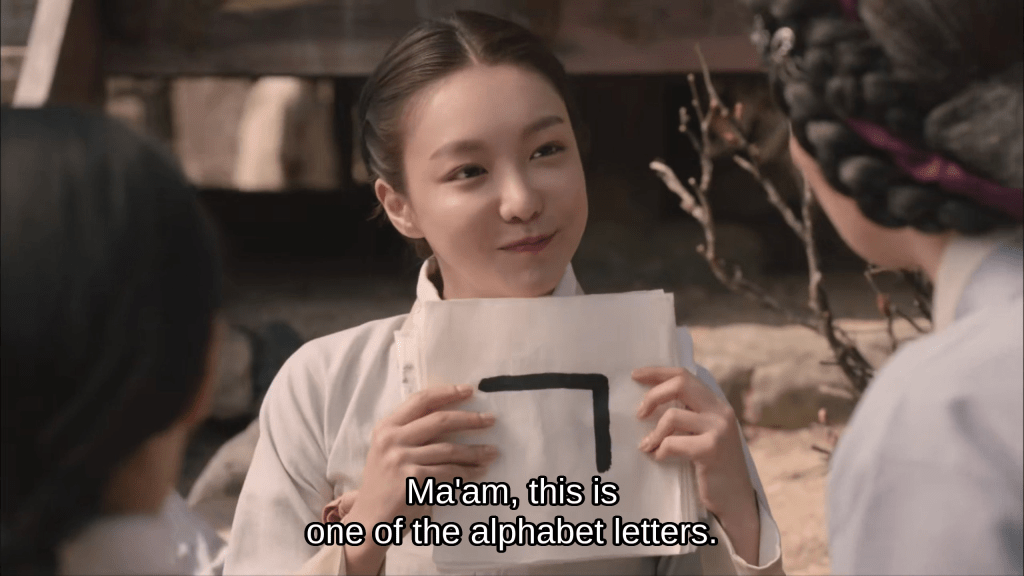
As the show tells it, Sejong worked on Hangeul in secret, because he knew plenty of scholars and nobles wouldn’t want commoners reading and writing. That’s the popular version of the story, though real historians still debate exactly how secret the project was and how much the Hall of Worthies (Jiphyeonjeon) scholars knew from the start. What’s not in dispute is the Joseon court’s record-keeping: the Sillok (Veritable Records of the Joseon Dynasty) are considered some of the most reliable historical records in the world, precisely because the reigning king was never allowed to read what the court historians wrote about him. They recorded everything. There’s a real, documented case of King Taejong falling off his horse and ordering the historian not to write it down. They wrote it down anyway. Those records still exist and can be checked online today.
Yeah, I don’t know if this is a review or what. But that’s Six Flying Dragons.


Leave a comment